Hypnerotomachia Poliphili
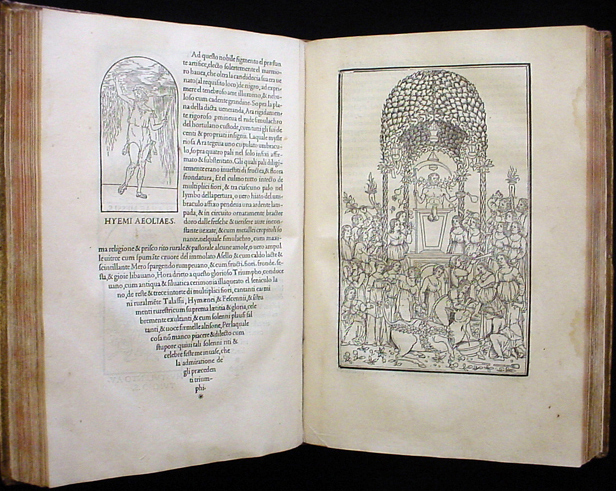
The lavish 1499 Venetian dream romance whose chapter initials spell an acrostic pointing to Francesco Colonna. The identification remains likely but unproven.

- Original byline
- Anonymous
- Published
- 1499
- Form
- Other works
- Authorship
- Disputed: Francesco Colonna is a candidate, not a fact
- Attribution source
- Wikidata P50 (Q914235); Wikipedia note
- Reason for anonymity
- Unrecorded
- Copyright
- Public domain
- Reference
- Wikipedia · Wikidata
The authorship story
The Hypnerotomachia Poliphili, printed by Aldus Manutius in 1499, is the most beautiful book of the Italian Renaissance and one of its strangest, a dream quest through architecture and desire written in a Latinate Italian of the author's own invention. No author is named, but the decorated initials opening its chapters spell out a Latin sentence: brother Francesco Colonna greatly loved Polia. A Venetian friar of that name is the standard candidate, though rival Colonnas and other authors have been argued, and the acrostic is evidence of a tease as much as a signature. The attribution remains, after five centuries, likely and unproven.
Questions readers ask
Who wrote Hypnerotomachia Poliphili?
The authorship of Hypnerotomachia Poliphili is disputed. Francesco Colonna is a documented candidate, but the attribution has never been established, and this entry does not state it as fact.
Can I read Hypnerotomachia Poliphili for free?
Yes. Hypnerotomachia Poliphili is in the public domain and the full text is free to read at the Internet Archive.
When was Hypnerotomachia Poliphili published?
Hypnerotomachia Poliphili was published in 1499 without an author’s name.
Related works
- Disputed
Kesh Temple Hymn
One of the oldest surviving works of literature, a Sumerian hymn praising the temple of Kesh. Tradition links the Temple Hymns to Enheduanna, but this hymn predates her.
- Still unknown
Amduat
An ancient Egyptian netherworld book describing the sun god's journey through the twelve hours of night. Like all Egyptian funerary literature, it names no author.
- Still unknown
Book of Caverns
An ancient Egyptian netherworld book depicting the sun god's passage over six caverns of the underworld. No author is recorded in the tradition.
- Still unknown
Book of the Dead
The ancient Egyptian collection of funerary spells guiding the dead through the afterlife. Tradition associates such texts with the god Thoth; no historical author exists in the record.