Key of Solomon
The most famous of the grimoires, attributed by its own tradition to King Solomon. Its actual medieval and Renaissance compilers are unknown.

- Original byline
- Anonymous
- Published
- Date not recorded
- Form
- Other works
- Authorship
- Still unknown
- Reason for anonymity
- Religious
- Copyright
- Public domain
- Reference
- Wikipedia · Wikidata
The authorship story
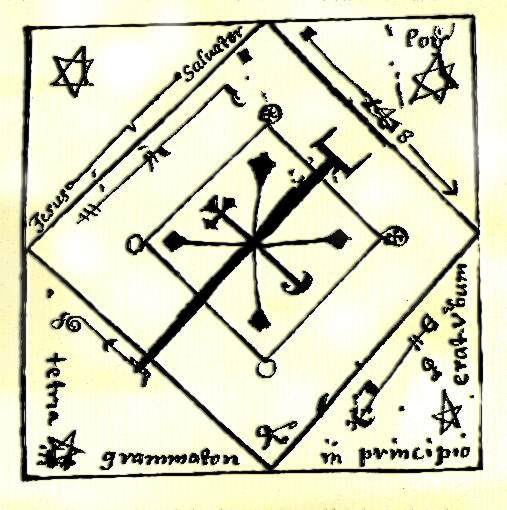
The Key of Solomon is a manual of ceremonial magic, setting out the preparation of the magician, the tools, and the pentacles by which spirits are commanded. Its manuscripts, mostly of the sixteenth and seventeenth centuries with roots in earlier Latin and Greek material, present the book as the testament of King Solomon himself. The attribution is pseudepigraphic: Solomon's legendary command of demons gave the genre its authority, and every grimoire in the family borrowed his name. The compilers who actually assembled and elaborated the text across centuries are unknown, and the most influential book of Western magic has no author but a legend.
Questions readers ask
Who wrote Key of Solomon?
Nobody knows. No author for Key of Solomon has been identified in the documented record.
Can I read Key of Solomon for free?
Yes. Key of Solomon is in the public domain and the full text is free to read at Project Gutenberg.
Related works
- Still unknown
Book of the Dead
The ancient Egyptian collection of funerary spells guiding the dead through the afterlife. Tradition associates such texts with the god Thoth; no historical author exists in the record.
- Still unknown
Book of the Earth
An ancient Egyptian funerary composition showing the sun's night journey through the earth god Aker. Anonymous, like all Egyptian netherworld books.
- Still unknown
Coffin Texts
The Middle Kingdom corpus of Egyptian funerary spells painted on coffins, ancestor of the Book of the Dead. Composed anonymously within priestly tradition.
- Still unknown
Litany of Re
A New Kingdom Egyptian funerary text invoking the sun god in seventy five forms. Produced by priestly tradition; the record names no author, only 'the clergy'.