Musica enchiriadis
The ninth century treatise that first taught polyphony in the West. Long attributed to Hucbald, an attribution now rejected; its author is unknown.

- Original byline
- Anonymous
- Published
- Date not recorded
- Form
- Treatises
- Authorship
- Still unknown
- Reason for anonymity
- Unrecorded
- Copyright
- Public domain
- Reference
- Wikipedia · Wikidata
The authorship story
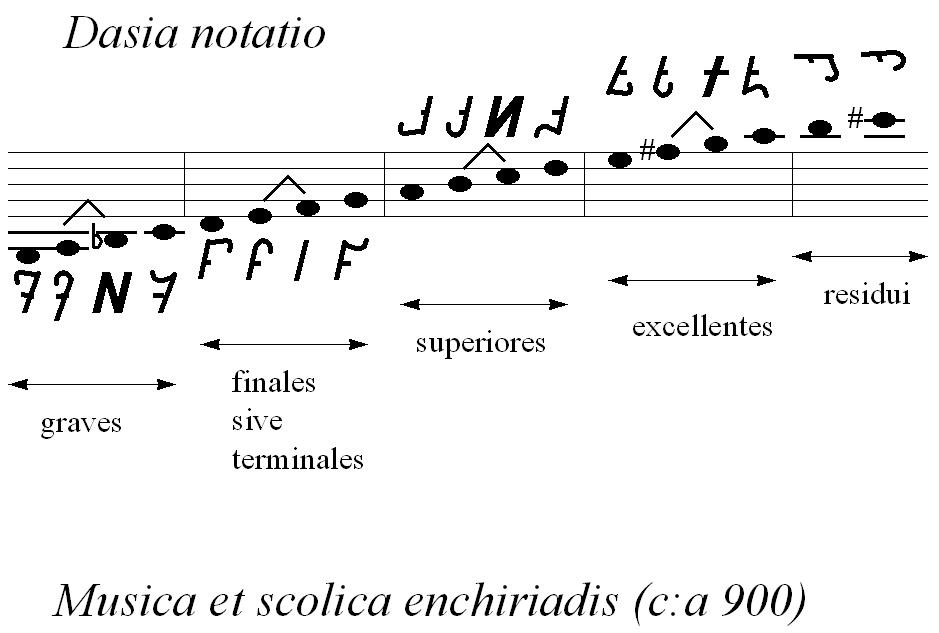
Musica enchiriadis is the ninth century Frankish handbook that first sets out rules for singing in parallel intervals, the organum from which Western polyphony and ultimately harmony descend. It travels with a companion commentary, Scolica enchiriadis, and circulated widely in the monastic schools of the Carolingian world. For centuries the pair were attributed to Hucbald of Saint-Amand; modern scholarship rejected that attribution and no replacement has been established. The foundational document of Western music theory is the work of an unknown master, probably a monastic teacher whose classroom outlived his name.
Questions readers ask
Who wrote Musica enchiriadis?
Nobody knows. No author for Musica enchiriadis has been identified in the documented record.
Can I read Musica enchiriadis for free?
Yes. Musica enchiriadis is in the public domain and the full text is free to read at the Internet Archive.
Related works
- Still unknown
Scolica enchiriadis
The ninth century dialogue commentary on Musica enchiriadis, foundational to Western music theory. Formerly attributed to Hucbald; author unknown.
- Still unknown
A Brief Inquiry into the Natural Rights of Man
A nineteenth century treatise on natural rights published without an author's name. No attribution has entered the documented record, and the writer remains unidentified.
- Still unknown
Actio Curiosa
An anonymous seventeenth century Hungarian dramatic work. No author has been identified in the documented record.
- Still unknown
Amduat
An ancient Egyptian netherworld book describing the sun god's journey through the twelve hours of night. Like all Egyptian funerary literature, it names no author.