The Book of Gates
The New Kingdom Egyptian netherworld book of the twelve gates of the night. An institutional priestly composition with no recorded author.

- Original byline
- Anonymous
- Published
- Date not recorded
- Form
- Other works
- Authorship
- Still unknown
- Reason for anonymity
- Religious
- Copyright
- Public domain
- Reference
- Wikipedia · Wikidata
The authorship story
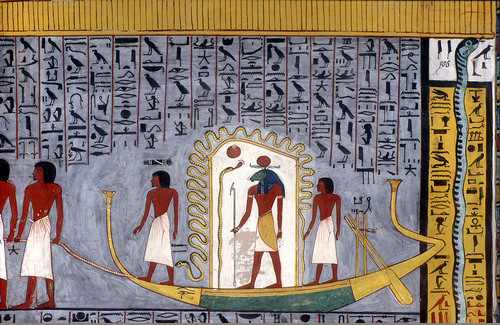
The Book of Gates guides the sun god through twelve fortified gates of the underworld, each guarded by serpents and fire, toward rebirth at dawn, and includes the famous scene of the four races of mankind under the gods' care. It appears in royal tombs and on sarcophagi from the late Eighteenth Dynasty onward. The composition names no author and never could: Egyptian netherworld books were created within priestly scriptoria as sacred equipment, not authored literature. Its anonymity is recorded here as unknown authorship in the fullest sense, a text with makers but no writer.
Questions readers ask
Who wrote The Book of Gates?
Nobody knows. No author for The Book of Gates has been identified in the documented record.
Can I read The Book of Gates for free?
Yes. The Book of Gates is in the public domain and the full text is free to read at the Internet Archive.
Related works
- Still unknown
Book of the Dead
The ancient Egyptian collection of funerary spells guiding the dead through the afterlife. Tradition associates such texts with the god Thoth; no historical author exists in the record.
- Still unknown
Book of the Earth
An ancient Egyptian funerary composition showing the sun's night journey through the earth god Aker. Anonymous, like all Egyptian netherworld books.
- Still unknown
Coffin Texts
The Middle Kingdom corpus of Egyptian funerary spells painted on coffins, ancestor of the Book of the Dead. Composed anonymously within priestly tradition.
- Still unknown
Key of Solomon
The most famous of the grimoires, attributed by its own tradition to King Solomon. Its actual medieval and Renaissance compilers are unknown.